
It is Fun!!

SCIENCE
Amateur radio, also known as ham radio, is a fascinating hobby that intersects with the realms of science in numerous ways. This global community of radio enthusiasts not only explores the art of communication but also embraces scientific principles to push the boundaries of technology and knowledge. In amateur radio, practitioners delve into various scientific disciplines, such as electronics, physics, and propagation theory, to understand how radio waves propagate through the atmosphere and interact with different objects and environments. They experiment with antennas, receivers, transmitters, and other equipment to optimize communication over long distances. Amateur radio operators also contribute to scientific research by participating in activities like meteor scatter propagation, where they bounce radio signals off the ionized trails left by meteors, assisting in the study of the Earth’s upper atmosphere. Furthermore, amateur radio operators engage in satellite communication, bouncing signals off orbiting spacecraft, fostering an understanding of satellite technology and space science. With their commitment to learning and experimentation, amateur radio enthusiasts exemplify the marriage between science and technology, constantly pushing the boundaries of what is possible in the world of radio communication.

TECHNOLOGY
Amateur radio is a captivating pursuit that thrives on the innovative use of technology. With its rich history and ongoing evolution, this hobby embraces the cutting-edge advancements in communication technology. Amateur radio operators utilize a wide range of sophisticated equipment, including transceivers, antennas, amplifiers, and digital modes, to explore the realms of wireless communication. They leverage digital signal processing techniques to decode complex modulation schemes, allowing for efficient and reliable transmission of data and voice. Moreover, the emergence of software-defined radios (SDRs) has revolutionized amateur radio by enabling operators to manipulate and reconfigure the functionality of their radios through software, opening up endless possibilities for experimentation and customization. The advent of the Internet and network technologies has also contributed to the fusion of amateur radio with digital modes, facilitating global communication through interconnected repeaters, reflectors, and networks. Furthermore, the integration of satellite technology has expanded the horizons of amateur radio, with operators now able to communicate with orbiting satellites and even launch their own amateur radio satellites. Through their mastery of technology, amateur radio enthusiasts demonstrate their passion for exploration and their ability to adapt to the ever-changing landscape of communication systems, ensuring that this time-honored hobby remains at the forefront of technological innovation.
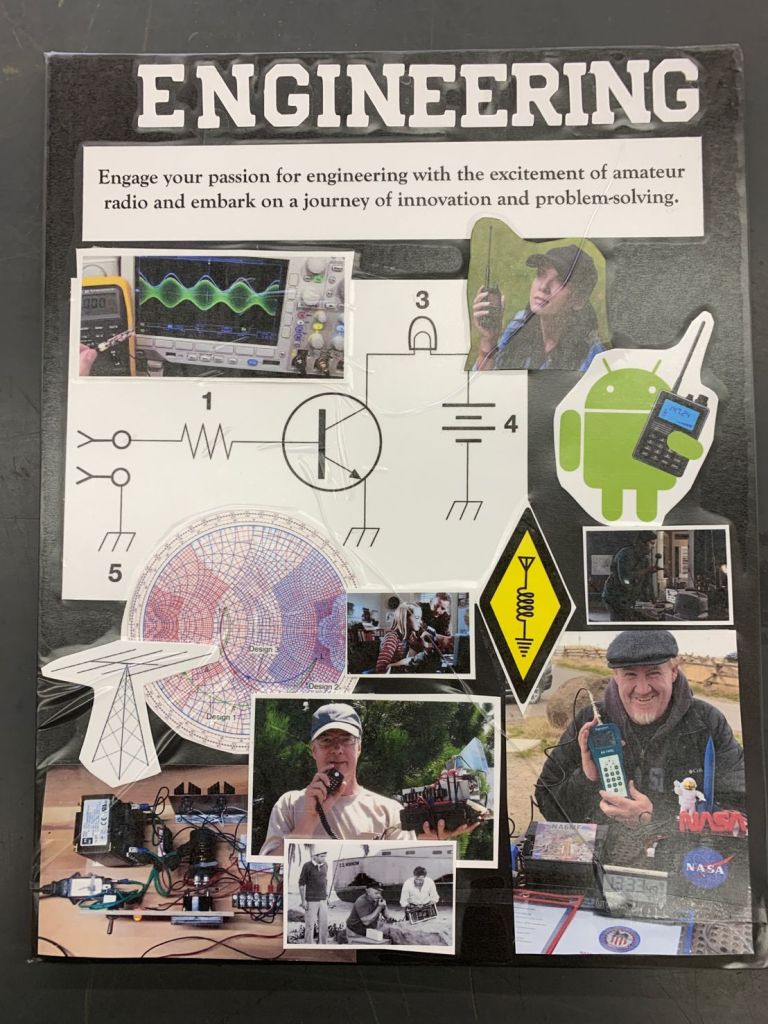
ENGINEERING
Engineering plays a vital role in the world of amateur radio, where enthusiasts employ their technical skills to design, build, and optimize intricate systems. Amateur radio operators often act as engineers, employing principles from various engineering disciplines to create robust and efficient radio communication setups. They meticulously design and construct antennas, taking into account factors such as frequency, polarization, gain, and impedance matching to maximize signal reception and transmission. Engineers in amateur radio also delve into the realm of electronics, constructing and modifying circuitry to enhance radio performance, reduce interference, and implement innovative features. With their expertise in radio frequency (RF) engineering, they fine-tune transmitter output power, optimize receiver sensitivity, and employ filtering techniques to suppress unwanted signals. Furthermore, engineering prowess is crucial in the integration of digital modes and software-defined radios, where operators develop software applications, design digital signal processing algorithms, and create custom interfaces to facilitate seamless communication. The engineering mindset of amateur radio operators fosters a culture of problem-solving and continuous improvement, as they constantly seek innovative solutions to overcome technical challenges and push the boundaries of what can be achieved in the realm of radio communication.
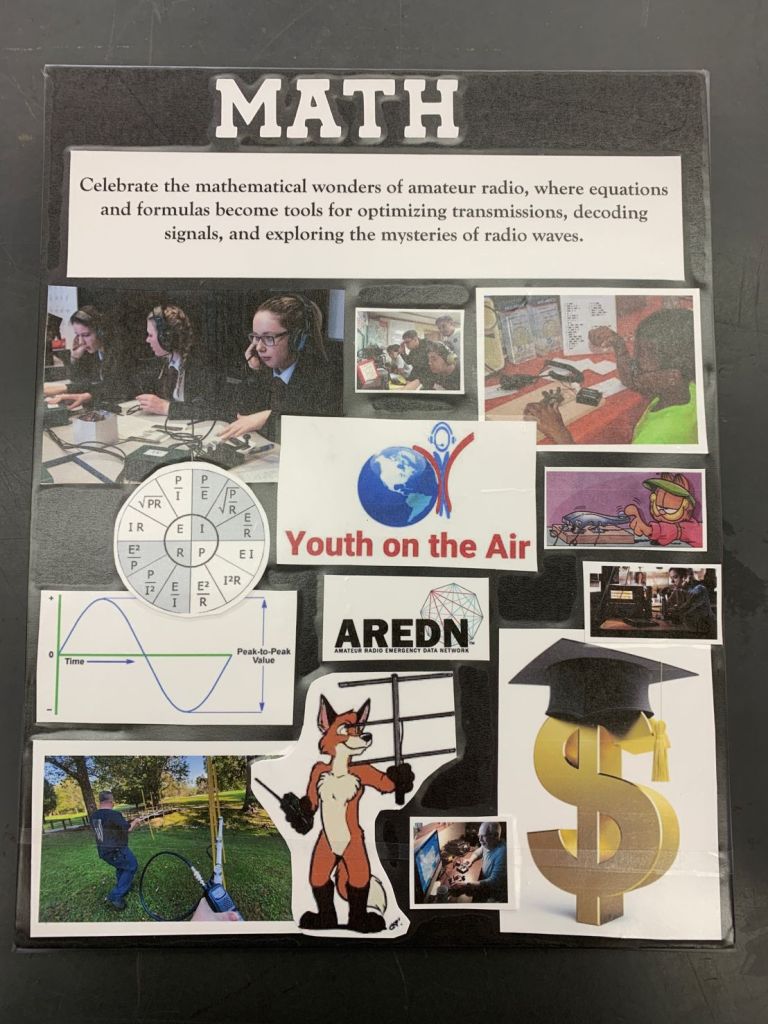
MATH
Mathematics forms the foundation of many aspects of amateur radio, and its application is integral to the hobby’s operations and advancements. Amateur radio operators rely on mathematical principles to calculate and predict antenna dimensions, resonant frequencies, and impedance matching for optimal performance. They use mathematical formulas and equations to understand and analyze radio wave propagation, taking into account factors such as distance, frequency, atmospheric conditions, and terrain profiles. By applying mathematical concepts like trigonometry and geometry, operators can accurately determine the angles and distances required for aligning antennas for point-to-point communication. Additionally, mathematical algorithms play a crucial role in digital signal processing, where complex modulation schemes are decoded, error correction codes are implemented, and data is efficiently transmitted and received. From calculating transmission line losses to designing frequency-selective filters, math is pervasive throughout the design and optimization of radio systems in amateur radio. By embracing mathematics, amateur radio enthusiasts are able to harness its power to enhance their understanding of radio communication and contribute to the ongoing advancements in the field. Mathematics in amateur radio not only teaches vital skills such as calculations for impedance matching and signal propagation, but also adds an element of fun and challenge, enticing operators to continuously refine their mathematical abilities while enjoying the thrill of exploring the vast possibilities of radio communication.
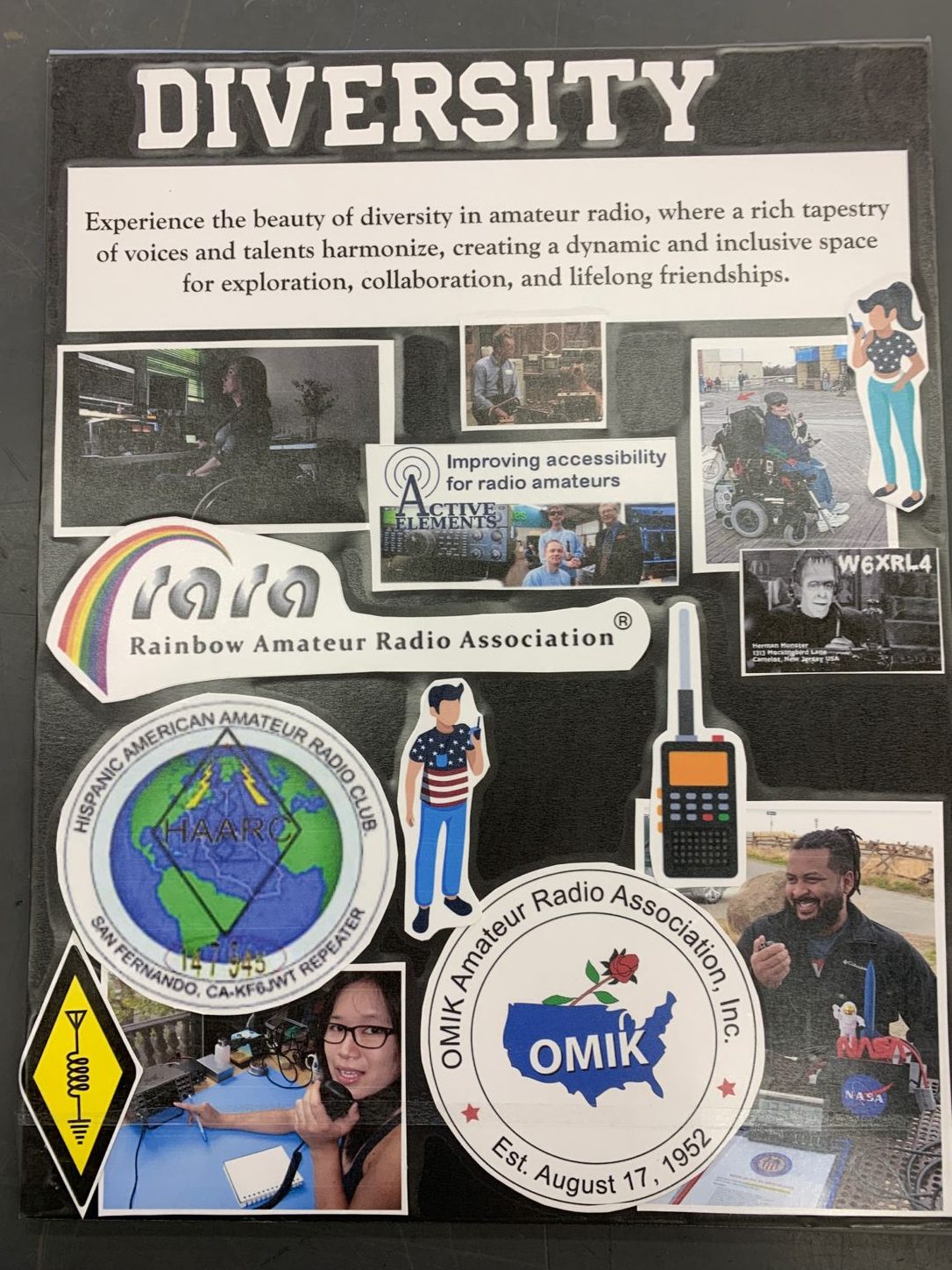
Diversity
Space exploration in amateur radio knows no boundaries when it comes to gender, age, race, or ability, as it is a hobby that welcomes and celebrates diversity. Amateur radio operators from all walks of life have the opportunity to delve into the realms of space communication, irrespective of their backgrounds or physical capabilities. Amateur radio provides an inclusive and accessible platform for individuals to explore and engage with space technology. It fosters a sense of community where people of diverse genders, ages, races, and abilities can come together to share their passion for space and radio communication. Amateur radio organizations and clubs actively promote diversity and inclusivity, encouraging participation from underrepresented groups and providing resources and support to ensure equal opportunities for all. The pursuit of space in amateur radio unites individuals in their shared curiosity and enthusiasm for the wonders beyond our planet, creating an environment where everyone’s contributions are valued, and where the pursuit of knowledge and exploration transcends any barriers that may exist in the wider world.
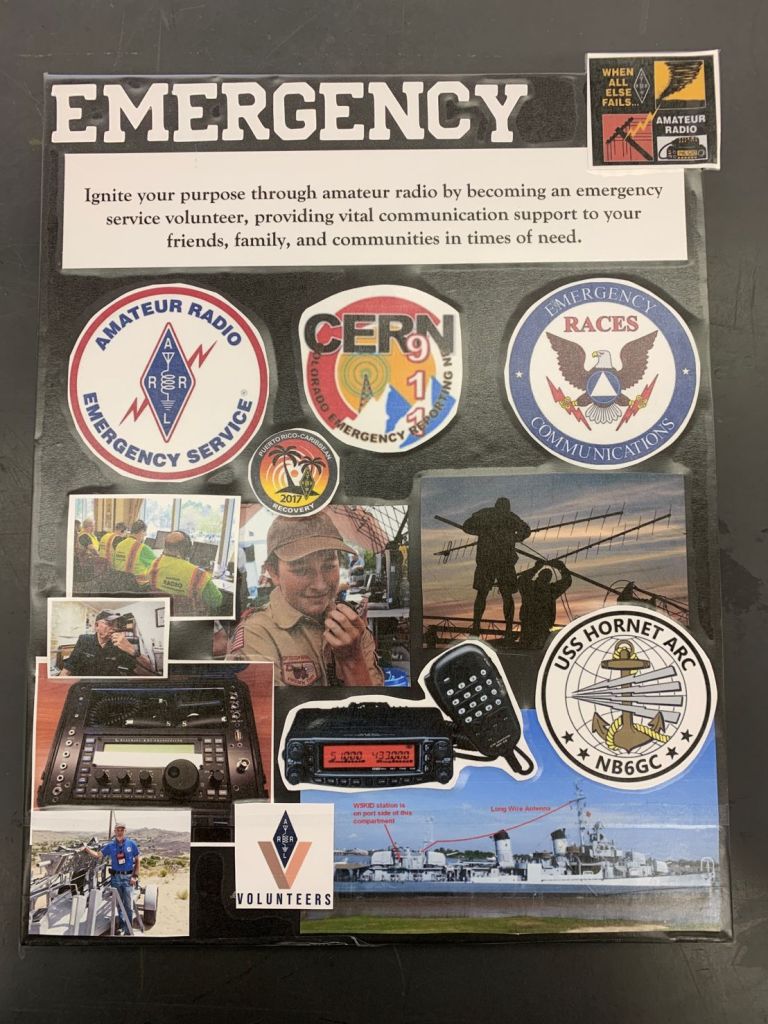
EMERGENCY
Amateur radio operators have a crucial role in emergency services, providing a vital communication lifeline when traditional communication infrastructure is disrupted or overwhelmed during times of crisis. These dedicated individuals are trained and prepared to offer their skills and equipment to support emergency response efforts. In times of natural disasters, such as hurricanes, earthquakes, or severe storms, amateur radio operators step in to establish and maintain communication networks, enabling critical information exchange between emergency responders, relief agencies, and affected communities. They often operate from mobile units or temporary stations, equipped with reliable and self-sufficient communication systems that can operate independent of external power sources. Through their extensive networks and long-distance capabilities, amateur radio operators can relay essential messages across local, regional, and even international boundaries, facilitating coordinated response efforts and aiding in search and rescue operations. Their ability to quickly deploy and establish communication links, coupled with their interoperability with other emergency services, makes amateur radio an invaluable asset during times of crisis. By volunteering their expertise, time, and resources, amateur radio operators serve as a resilient communication backbone, ensuring that critical information flows even when traditional means of communication are disrupted, ultimately contributing to the safety and well-being of communities in need

OUTDOORS
Amateur radio enthusiasts have a special affinity for the great outdoors, as the hobby offers a unique opportunity to combine their love for radio communication with outdoor activities. One popular aspect of outdoor amateur radio is participating in programs like POTA (Parks on the Air), SOTA (Summits on the Air), and BOTA (Beaches on the Air). These initiatives encourage operators to venture into nature, setting up their equipment in national parks, mountain summits, or picturesque beaches to establish contacts and exchange signals with fellow operators worldwide. The Wilderness Protocol, a set of guidelines specific to amateur radio, promotes respectful and efficient communication in remote wilderness areas, allowing operators to connect with others while preserving the serenity of the natural environment. Foxhunts, a thrilling activity in amateur radio, involve tracking down hidden radio transmitters using direction-finding techniques, adding an element of adventure to outdoor pursuits. Moreover, camping, hiking, biking, overlanding, and mountain climbing provide opportunities for amateur radio operators to venture into remote areas, exploring uncharted terrains while establishing communication links with fellow operators or emergency services. The combination of the outdoors and amateur radio creates a harmonious blend of exploration, adventure, and technical expertise, allowing enthusiasts to immerse themselves in nature while engaging in the exciting world of radio communication.

SPACE
Space exploration and amateur radio intersect in a captivating and symbiotic relationship, offering enthusiasts a unique opportunity to connect with the wonders of the cosmos. Amateur radio operators engage in satellite communication, using orbiting spacecraft as relays for their signals. They communicate with amateur radio satellites, such as those deployed by educational institutions or ham radio organizations, enabling them to reach locations beyond the horizon and explore the realm of space communication. These satellites provide a platform for experimentation, fostering a deeper understanding of satellite technology and space science. Amateur radio operators track and receive signals from satellites, decode telemetry data, and even contribute to satellite tracking and monitoring efforts. Moreover, they can participate in events like amateur radio contests that specifically focus on satellite communication, testing their skills and expanding their knowledge of space-related communication techniques. Additionally, amateur radio operators actively engage in activities like Earth-Moon-Earth (EME) communication, where they bounce radio signals off the moon’s surface and receive the reflected signals back on Earth, demonstrating the immense reach of amateur radio and its connection to celestial bodies. Through their endeavors in space communication, amateur radio enthusiasts become ambassadors of exploration, bridging the gap between Earth and the cosmos, and contributing to our understanding of space technology and the vastness of the universe.

COMMUNITY
Amateur radio enthusiasts form a vibrant and tight-knit community that extends its reach beyond the realm of radio communication. This community actively engages with various public events, such as parades, marathons, triathlons, stock shows, fairs, and festivals, enriching these gatherings with their presence and expertise. Amateur radio operators frequently volunteer their time and skills to provide vital communication support during these events, ensuring the smooth coordination of activities and the safety of participants. They set up temporary communication stations, coordinate logistics, and establish networks to relay crucial information. Their dedication and service contribute to the overall success of these events, fostering a sense of unity and collaboration within the larger community. Amateur radio operators also often showcase their equipment and demonstrate the fascinating aspects of radio communication to the public, inspiring curiosity and sparking interest in the hobby. Moreover, these events serve as opportunities for amateur radio operators to come together, exchange ideas, and strengthen their bonds, forging lasting friendships within the community. The collective spirit and shared passion for amateur radio create a sense of camaraderie that extends far beyond the airwaves, transforming these public events into vibrant celebrations of technology, service, and human connection.
 Radiant Waves
Leave a comment